
India continues to face LPG supply challenges for the third consecutive week due to disruptions caused by the West Asia conflict, though panic buying is showing signs of easing. The government is prioritising domestic household supplies and encouraging alternative fuel sources.

'Historically, India has depended on the Middle Eastern Gulf for nearly 90 per cent of its LPG imports. Shifting to alternative suppliers is not something that can happen quickly.'

The government has assured citizens that there is no need to panic book LPG cylinders, as uninterrupted supply to households is being ensured despite the ongoing conflict in West Asia.

Petrol price has been increased by 87 paise in Delhi from Rs 98.64 to Rs 99.51 per litre. Diesel rates have gone up by 91 paise from Rs 91.58 to Rs 92.49.

India significantly increased its crude oil imports from Russia and the United Arab Emirates in June, securing supplies as the Strait of Hormuz began to reopen, with Russian barrels remaining attractive due to discounts and UAE supplies offsetting earlier uncertainties.

The government will lift restrictions on the sale of petrol and diesel to commercial and industrial consumers from July 1, easing emergency measures imposed to manage fuel supplies.

The Indian government is actively developing a policy for flex-fuel vehicle adoption and aiming for 100 per cent ethanol blending in petrol to enhance energy self-reliance, particularly in light of supply disruptions from the West Asia conflict.

Global oil prices fell on Thursday to their lowest levels since before the outbreak of the Iran conflict, offering a significant economic tailwind for India, the world's third-largest crude importer, by easing inflation risks, reducing the import bill and improving the government's fiscal position.
As India marks a decade of the Goods and Services Tax (GST), the focus is shifting towards enhancing efficiency through artificial intelligence, data sharing, and process simplification. The reform, which unified India's indirect tax system, has significantly broadened the tax base and boosted revenues, with future plans including a streamlined two-tier rate structure and continued technological integration to reduce compliance costs and combat evasion.
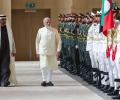
Prime Minister Narendra Modi has offered India's support to bring peace to West Asia during talks with UAE President Sheikh Mohamed bin Zayed Al Nahyan. Both countries signed agreements to strengthen strategic collaborations in energy and defence.

The government has dismissed speculation of an imminent increase in petrol and diesel prices, assuring citizens that there are no plans for a hike despite rising crude oil costs.

India's state-run oil marketing companies (OMCs) are projected to incur under-recoveries of approximately Rs 80,000 crore on liquefied petroleum gas (LPG) sales in FY27 if current loss levels persist, according to rating agency Icra.

The Indian government has restricted industrial, commercial, and institutional users from purchasing petrol and diesel from retail petrol pumps, directing them to bulk sale points instead. This move, which can last up to 90 days, aims to address abnormal demand growth and prevent localised shortages caused by a significant price difference between retail and bulk fuel prices.

It, however, conceded that 20 per cent blending of ethanol with petrol leads to 3-5 per cent lower mileage in vehicles than conventional petrol, but said the blend offers a significantly higher octane rating, superior anti-knock properties, faster combustion, better pickup, smoother acceleration, and cleaner engine operation.

The Petroleum Planning and Analysis Cell (PPAC) has denied an RTI request for data on oil imports from Russia, citing its 'commercial and confidential' nature and exemptions under the RTI Act. The Central Information Commission supported this decision, referencing strategic and economic interests.

The Indian government has issued a stern warning to industrial users who are reportedly procuring cheaper retail fuel instead of industrial-grade fuel, leading to significant losses for state-run oil marketing companies (OMCs) and potential local shortages. This diversion, driven by a substantial price difference between retail and bulk diesel, is adversely impacting OMCs, which are absorbing daily losses of approximately 550 crore to keep retail prices stable.

A senior government official confirms that Indian vessels do not require permission to navigate the Strait of Hormuz, despite regional tensions. Several Indian ships, including LPG tankers, have safely crossed the strait, ensuring continued supply of essential commodities to India.

India bought 1.87 million barrels of Russian oil per day in May so far, meeting approximately 40 per cent of its oil imports.

India's pharmaceutical industry is experiencing increased bulk drug prices, particularly for APIs from China, following the escalation of the West Asia crisis in March. While current inventories provide a temporary buffer, concerns are mounting over the availability of key solvents and feedstocks, potentially leading to manufacturing disruptions and shortages in specific drug categories.

The Indian government has directed oil refineries to increase LPG production to ensure a stable supply of domestic cooking gas, amidst concerns over potential disruptions from the escalating Middle East conflict and its impact on imports.

In a first, Indian oil public sector undertakings (PSUs) finalised a one-year contract to import around 2.2 million tonnes (mt) of liquefied petroleum gas (LPG) from the US. The LPG import deal comes at a time when negotiations for an India-US bilateral trade agreement (BTA) are gathering steam. Earlier in the month, US President Donald Trump had said Washington and New Delhi were "pretty close" to reaching a fair trade deal.

A recently finalised peace deal between the US and Iran, set to be signed on June 19, is expected to significantly benefit India's economy by boosting exports to West Asia, stabilising the rupee, and easing inflationary pressures, according to exporters and experts.

India is well-stocked with inventories of crude oil and key petroleum products, including petrol, diesel, and aviation turbine fuel (ATF), to deal with short-term disruptions as the war intensifies in West Asia, Union Minister of Petroleum and Natural Gas Hardeep Singh Puri said on Tuesday.

Two more Indian-flagged LPG tankers have begun their journey from the Persian Gulf, navigating the Strait of Hormuz amidst regional conflict, following disruptions caused by recent tensions in the Middle East.

The Indian government has waived customs duty on critical petrochemical products until June 30 to ensure supply stability and provide relief to consumers amid disruptions caused by the crisis in West Asia.

Reliance Industries Ltd (RIL) has expressed caution regarding 'extreme volatility' risks stemming from the West Asian conflict, which could impact global oil demand and the company's margins, while also noting that near-term retail consumption demand may remain sensitive to macro conditions. Chairman Mukesh Ambani, in the annual report, remained silent on the timeline for Jio Platforms' anticipated public listing, stating the group will 'continue to evaluate strategic pathways'.

Petrol and diesel prices in India have been increased for the second time in a week, following a long freeze on revisions. The increase comes as global crude prices surge and state-run oil firms look to recoup losses.

Qatar has halted liquefied natural gas (LNG) production after its facilities came under attack amid the ongoing West Asia conflict, disrupting supplies to India and squeezing feedstock availability for key domestic sectors.
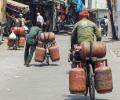
'If 5% of the total revenue was spent on LPG (pre-war), it is now expected to double. The overall food cost in restaurants is expected to rise by 4-6%.'

India possesses two months of fuel stockpiles and faces no supply concerns despite global energy disruptions, according to Oil Minister Hardeep Singh Puri. However, state-run fuel retailers are incurring losses of up to Rs 1 lakh crore in a single quarter due to elevated crude prices and unchanged retail fuel prices, raising questions about the sustainability of these losses.
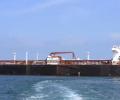
Despite ongoing tensions in West Asia, the successful arrival of the LPG carrier 'Nanda Devi' in Gujarat ensures a steady supply of liquefied petroleum gas to India, highlighting the country's efforts to secure its energy needs.

India imports nearly 60 percent of its LPG, with most cargo previously coming through the Strait of Hormuz, now closed for commercial shipping.

External Affairs Minister S Jaishankar discussed the West Asia conflict and its impact on energy supplies with his Russian counterpart Sergey Lavrov and EU's Foreign Policy chief Kaja Kallas.

A drone designed to tranquilise violent elephants without close human contact has been unveiled, marking a significant advancement in using indigenous UAV technology for mitigating human-wildlife conflict.
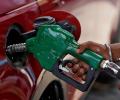
Petrol diesel price today March 20, 2026: IOCL & HPCL hike premium petrol (XP95, Speed, Power) by 2/litre and industrial diesel by 22/litre. Regular petrol in Delhi 94.77, diesel 87.67 unchanged. Full city-wise rates inside.
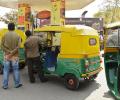
The government has slashed allocation of natural gas used for LPG production, and diverted the low-priced fuel to city gas retailers like Indraprastha Gas Ltd and Adani-Total Gas Ltd to meet a part of their requirement for CNG/piped cooking gas supplies, according an official order. The government had in October and November last year cut supplies of low-priced natural gas coming from old fields such as Mumbai High and Bassein fields in the Bay of Bengal, to city gas retailers by as much as 40 per cent in view of limited output.

18 Indian-flagged vessels with 485 Indian seafarers still remain in the western Persian Gulf region

Dinesh Trivedi's experience as a businessperson and his fluency in Bengali are expected to be crucial in strengthening India-Bangladesh relations, particularly in attracting Indian investments to Dhaka.
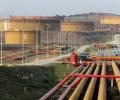
In a significant change to regulations, oil and gas regulator PNGRB has proposed a new policy of how tariffs for pipelines carrying gas to users will be determined, and proposed charging city gas entities selling CNG and piped cooking gas to households at the lowest rates.
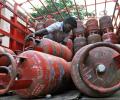
The Indian government has allocated an additional 40,000 kilolitres of kerosene to states as an alternative fuel to LPG, amid the ongoing crisis in West Asia. The government assures a comfortable crude oil supply situation in the country.
